Luis Sancho
PO Box 411
Honomu, HI 96728
808-964-5535
pro se
IN THE UNITED STATES DISTRICT COURT
DISTRICT OF HAWAII
--oo0oo--
LUIS SANCHO, et al., ) Civil No. ____________
)
Plaintiffs ) AFFIDAVIT OF WALTER L. WAGNER
) IN SUPPORT OF TRO AND
vs. ) PRELIMINARY INJUNCTION;
) EXHIBITS “A” & “B”
US DEPARTMENT OF ENERGY, et al., )
)
Defendants )
________________________________)
AFFIDAVIT OF WALTER L. WAGNER IN SUPPORT OF
TRO AND PRELIMINARY INJUNCTION
I, Walter L. Wagner, affirm state and declare, under penalty of perjury of the laws of the State of Hawaii, as follows:
1. I am a nuclear physicist with extensive training in the field. I obtained my undergraduate degree in 1972 at Berkeley, California in the biological sciences with a physics minor, and graduate degree in 1978 in Sacramento, California in law.
2. Commencing in 1973 I worked extensively in cosmic radiation research at UC Berkeley, Physics Department, Space-Sciences, and am credited with discovery of a novel particle only previously theorized to exist [by Nobelist P.A.M. Dirac], namely a magnetic monopole. That discovery still remains controversial as to the identify of that novel particle, and numerous searches for magnetic monopoles are still currently underway, or proposed, including at the Large Hadron Collider [LHC].
3. Commencing in 1979 I began employment as a federal nuclear safety officer with the US government, from which I am currently retired, though I remain in frequent contact with my former duty station. My federal duty station was with the US Veterans Administration, and I managed an extensive program of nuclear safety involving usages of ionizing radiations from machines [X-ray, CT, etc.], and from a wide variety of radioactive materials produced by particle accelerators, in nuclear reactors, or extracted from nature [principally uranium and its radio-daughter radium]. This work involved enforcement of the regulations of the US Nuclear Regulatory Commission, the US Department of Energy, and the US Department of Transportation. Essentially, my job was to look for and root-out the safety flaws overlooked by scientific researchers as it pertained to nuclear physics, as a protection not only for the researcher’s own health, but for the visitors and population at large.
4. Following retirement from federal employment I embarked on teaching science and mathematics for many years to grade school and college students. I was noted for having obtained the highest test-score on the basic teacher credentialing examination in California [CBEST] where I initially began teaching. I am presently likewise retired from that field, though I still engage myself in formal programs for science education, including the Journey Through the Universe educational outreach program hosted annually by the Big Island astronomy community, where I live. Such educational endeavors included periods of time as an instructor at Punahou, Iolani, and several other schools in the Honolulu district.
5. I have remained active in the field of theoretical nuclear physics, and serve as a science editor for Wikipedia, having numerous articles and revisions in nuclear physics to my credit, and I am very familiar with the editing procedures and processes, and with the nuclear physics editors at Wikipedia. I have been active in the field of theoretical micro-black-holes being created by advanced colliders since publication of my work in Scientific American in July, 1999.
6. I have been in close contact with defendant CERN, or its agents, and I am fully apprised of the Large Hadron Collider [LHC] enterprise, the physics of the project, the expectations of the physics community with the results that might be obtained, as well as the articulated risks that have been discussed in the scientific literature and on the internet.
7. The attached Exhibit “A” is a true copy of a letter I received from CERN management pertaining to the LHC. I had written to CERN expressing the concern that two safety arguments were seriously flawed; namely the “strangelet” argument and the “micro black hole” argument, which I detail infra. In response, they mailed me the Exhibit “A” letter, which was dated October 1, 2007 and which reads in pertinent part:
“Dear Dr. Wagner
Thank you for communicating to CERN your concerns about the ‘Operational Safety’ of the LHC. We can assure you that CERN takes such issues very seriously.
Earlier this year we mandated a group of experts, not themselves members of the LHC experimental collaborations, to assess safety aspects of LHC operation. This group is mandated to provide by the end of this year a written report, which will be made available to the scientific community and to the general public through CERN Web pages.”
The letter was signed by both Director General Robert Aymar and Chief Scientific Officer Jos Engelen.
8. Attached herewith as Exhibit “B” is a true and correct copy of an email I received on January 31, 2008 in response to my query to CERN’s LHC Safety Assessment Group [LSAG], which is apparently the “group of experts” referenced by Mr. Aymar. That email is pasted below [including typos] and reads:
“CC: lsag@cern.ch
From: LHCSafetyAssessment.Group@cern.chSubject: Re: 2007-2008 Safety ReviewDate: Thu, 31 Jan 2008 19:37:25 +0100To: wbgi@hotmail.comhello, we are still finishing the preparation of the report, but expect it to be ready within a month. We shall inform you when this happens, so youcan download it promptly.
best regards,
LSAG,
LHC Safety Assessment Group”
To date, I have received no notification of completion of the report, nor has it been posted on their web site, as promised previously. Rather, I am informed that they are still delayed in preparing their LSAG Safety Review.
9. In order to adequately evaluate and assess the most recent Safety Review being prepared by CERN’s LSAG, I would need a minimum of six months after it is released to me and the scientific community in order to review all facets of the document, as well as the most recent scientific literature, to determine whether or not CERN adequately addressed the safety concerns regarding strangelets and micro black holes [discussed infra], and other concerns also articulated. My conversations with other scientists concerned about this issue indicate that they too would need a minimum of four to six months to fully assess such safety review and the relevant scientific literature.
10. I am informed and believe that CERN is planning to commence operation of the LHC in April or May, 2008, and that that planned start-up date leaves an inadequate amount of time in which to review and assess their most recent Safety Review, not yet released. Accordingly, court intervention is required to preclude operation of the LHC prior to full review of CERN’s LSAG Safety Review by myself and other members of the scientific community.
11. In a nutshell, the safety issues pertaining to the LHC are discussed in the below Wikipedia article about the LHC, which I have reviewed and found correct. I paste below the relevant sections, obtained from Wikipedia on February 14, 2008 at http://en.wikipedia.org/wiki/Large_Hadron_Collider#Safety_concerns_and_assurances:
Large Hadron Collider
The Large Hadron Collider (LHC) is a
particle accelerator and
hadron collider located at
CERN, near
Geneva,
Switzerland (
46°14′N, 6°03′E). Currently under construction, the LHC is scheduled to begin operation in May 2008.
[1][2] The LHC is expected to become the world's largest and highest-energy particle accelerator. The LHC is being funded and built in collaboration with over two thousand physicists from thirty-four countries as well as hundreds of
universities and laboratories. When activated, it is theorized that the collider will produce the elusive
Higgs boson, the
observation of which could confirm the predictions and 'missing links' in the
Standard Model of physics and could explain how other
elementary particles acquire properties such as
mass.
[3] The verification of the existence of the Higgs boson would be a significant step in the search for a
Grand Unified Theory, which seeks to unify three of the four
fundamental forces:
electromagnetism, the
strong force, and the
weak force. The Higgs boson may also help to explain why the remaining force,
gravitation, is so weak compared to the other three forces. In addition to the Higgs boson, other theorized novel particles that might be produced, and for which searches
[4] are planned, include
strangelets,
micro black holes,
magnetic monopoles and
supersymmetric particles[5].
Safety Concerns
Concerns have been raised that performing collisions at previously unexplored energies might unleash new and disastrous phenomena. These include the production of
micro black holes, and
strangelets.
…
However, the concerns below were inadequately addressed, and another study was commissioned by CERN in 2007 for publication on CERN's web-site by the end of 2007.
Micro Black Holes
Although the
Standard Model of particle physics predicts that LHC energies are far too low to create
black holes, some
extensions of the Standard Model posit the existence of extra spatial dimensions, in which it would be possible to create
micro black holes at the LHC
[21][22][23] at a rate on the order of one per second. According to the standard calculations these are harmless because they would quickly decay by
Hawking radiation. The concern is that Hawking radiation (which is still debated
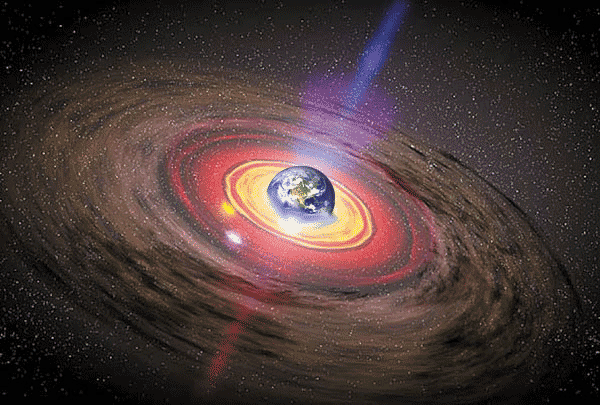
[24]) is not yet an experimentally-tested phenomenon, and so micro black holes might not decay as rapidly as calculated, and accumulate inside the earth and eventually devour it.
Strangelets
Strangelets are a hypothetical form of
strange matter that contains roughly equal numbers of up, down, and strange
quarks and are more stable than ordinary nuclei. If strangelets can actually exist, and if they were produced at LHC, they could conceivably initiate a runaway fusion process (reminiscent of the fictional
ice-nine) in which all the nuclei in the planet were converted to strange matter, similar to a
strange star.
[bold underlining added for emphasis]
12. The above sections of Wikipedia pertaining to “Strangelets” and “Micro Black Holes” were written by a Wikipedia science editor [and not by myself] known to me as a well-respected Wikipedia editor fully knoweldgeable in nuclear physics, and who is a co-author on numerous scientific papers on “strange matter” with at least one Nobel laureate in physics. Wikipedia editors are usually anonymous, and develop an on-line reputation based on their writings. They typically utilize a ‘nom de plume’ for their writings rather than their own name as a protection for themselves, which they use to establish their reputation. The nom de plume for the above is “Dark Formal”. I concur with his assessment that there is at present a significant risk that has not been proven to be an impossibility, and that operation of the LHC may have unintended consequences which could ultimately result in the destruction of our planet.
13. I detail the rationale for these risks, as well as the demolition of the previous safety argument utilized by CERN in earlier, flawed, safety analysis to minimalise the risk, in a separate addendum to be filed subsequently as “Safety Review Addendum”.
14. I draw as an analogy to the “go for launch” attitude of the commissioning of the LHC as being the same as the “go for launch” attitude of some NASA administrators and engineers for the Challenger disaster. I quote from Senator John McCain in his new book “Hard Call Great Decisions and the Extraordinary People Who Made Them”, pages 58-59:
… After presenting their concerns, they recommended that the launch be delayed until temperatures at Canaveral reached fifty-three degrees, the lowest temperature at which they had reliable data about the O-rings’ effectiveness.
NASA managers expressed surprise and annoyance at the recommendation and challenged the conclusion. A senior NASA executive at Marshall was reported to have said he was “appalled” by Thiokol’s recommendation, and the company’s vice president for the Space Booster Program, Joe Kilminster, asked for five minutes to discuss the problem with his engineers off-line, during which the engineers continued to voice objections to the launch.
In a final review, with only senior Thiokol executives involved, Vice President for Engineering Robert Lund was asked by Senior Vice President Jerald Mason to put on his “management hat”. The result of their discussion was an agreement that while cold temperatures threatened the integrity of the primary O-rings in the booster field joints, the data were inconclusive, and secondary O-rings in each of the joints ought to seal effectively. In simultaneous discussions at Kennedy, engineer Arnie Thompson continued to press for postponement. The second teleconference between all parties began at 11:00 P.M. Joe Kilminster explained Thiokol’s conclusions and provided the company’s “engineering assessment” – or reassessment in this case – that the launch could remain on schedule. NASA’s senior manager at Marshall, George Hardy, asked Kilminster to put Thiokol’s recommendation in writing.
Thus was the space shuttle Challenger launched on its fatal flight of January 28, 1986. No one individual involved in the decision deserves exclusive or even primary blame for its consequences. The systematic downgrading of technical problems and aggregating of mistaken assumptions that were reinforced with every successful shuttle mission led the seven astronauts to their doom. Waiving launch constraints had become routine at NASA, and every dodged bullet reinforced NASA’s false confidence. Practice had made imperfect the situational alertness of the decision’s many authors. Important but not critical considerations were accorded a higher priority than the primary objective, that the Challenger return safely to earth. The shuttle had to keep flying. The mission would succeed because it had to succeed.
In a dissenting and harsher view included in the Rogers Commission report, [Nobelist] Richard Feynman made the following observation:
“It appears that there are enormous differences of opinion as to the probability of a failure with loss of vehicle and of human life. The estimates range from roughly 1/100 to 1/100,000. The higher figures come from the working engineers, and the very low figures from management. … Let us make recommendations to ensure that NASA officials deal in a world of reality in understanding technological weaknesses and imperfections well enough to be actively trying to eliminate them. They must live in reality in comparing the costs and utility of the Shuttle to other methods of entering space. And they must be realistic in making contracts in estimating costs and the difficulty of the projects. Only realistic flight schedules should be proposed, schedules that have a reasonable chance of being met. If in this way the government would not support them, then so be it. NASA owes it to the citizens from whom it asks support to be frank, honest and informative, so that those citizens can make the wisest decisions for the use of their limited resources. For a successful technology, reality must take precedence over public relations, for nature cannot be fooled.”
[bold underlining added for emphasis]
15. I draw as a distinction in the analogy between the above situation, and the situation involving the LHC, that the “go for launch” decision of spaceship Challenger involved placing the lives of only 7 people at risk, whereas the “go for launch” decision for the LHC located on spaceship Earth involves placing the lives of some 7 Billion people at risk, as well as all of our future descendants not yet born.
16. The prior safety reviews by CERN had serious flaws which are purportedly being addressed in the current LSAG Safety Review that is not yet completed. The most serious of those flaws, in my opinion, was their reliance on a “cosmic ray argument” that CERN LHC collisions should be safe. In essence, they compared CERN collisions at the LHC to cosmic ray collisions in nature, and found the anticipated LHC collisions to actually be lower in energy than those in nature here on earth, and therefore they concluded that the LHC operation should be safe. They reasoned that if any disastrous particle could be created, it would already have been created eons ago by nature, and since nature has caused no disaster here on earth, so too the LHC should cause no disaster.
17. The flaw with that argument that was overlooked during their previous safety assessment was that any such novel particle created in nature by cosmic ray impacts would be left with a velocity at nearly the speed of light, relative to earth. At such speeds, a novel particle such as a micro black hole that might be created in nature, is believed by most theorists to simply pass harmlessly through our planet with nary an impact, safely exiting on the other side. These would be nearly impossible to detect in nature. Conversely, any such novel particle that might be created at the LHC would be at slow speed relative to earth, a goodly percentage
[1] would then be captured by earth’s gravity, and could possibly grow larger [accrete matter] with disastrous consequences of the earth turning into a large black hole. Essentially, any such safety argument would have to rely on a presumed cross-section for capture of a relativistic micro black hole being sufficiently large to stop such particle, either by a planet, star, or even neutron star, when in fact we have ZERO information on what such cross-section for capture actually is.
18. Numerous other safety risks involving other principles of physics have also been inadequately addressed in prior safety reviews, and these need thorough review by myself and other members of the science community, in addition to review of the CERN reassessment of their “cosmic ray argument”. These additional risks will be more thoroughly detailed in the Safety Review Addendum to be filed later.
19. Alternative scientific methods that pose no risk exist for obtaining some of the information being sought by the LHC. For example, NASA plans to launch the GLAST satellite in May, 2008 to search in part for a determination as to whether miniature black holes evaporate by theoretical Hawking radiation, rendering them harmless. If they are part of the component of Dark Matter, and if they do evaporate, the GLAST satellite might well detect such signal. Delaying of the LHC pending review of the LSAG Safety Review might in fact allow for NASA to answer some of the safety concerns with additional information being sought by alternative methods.
20. Likewise, much of the purported expected increase in knowledge to be engendered by operation of the LHC can instead be acquired by passive observations made from telescopes and satellites, without resorting to attempts to create novel forms of Dark Matter [such as strangelets and micro black holes] here on earth. As shown in the affidavit of plaintiff Luis Sancho, Dark Matter pervades much of our Milky Way galaxy, and has recently been discovered to compose upwards of 90% of our galaxy. All available information, however, shows that Dark Matter indeed feeds upon “ordinary” matter from which stars, planets and people are composed, converting it into more dark matter. Because earth is presently separated by the vast distances of our Milky Way, we are presently protected from such Dark Matter. Creation of such Dark Matter on Earth would then be seen to be foolhardy, at best.
21. Based on the lack of information presently available, and based on the information that there is at least a non-zero risk of creating dangerous material at the LHC, but that we also cannot state with certainty that the risk is 100%, statistically we would have to conclude that the risk is half-way between those two extremes, or a 50% chance of disastrous consequence, until we can obtain better information.
22. Additionally, I am concerned about the issues raised in the affidavit of Mark Leggett regarding the ethical structure of the LSAG Safety Review, though I will save my own comments until after I review that forthcoming document. Likewise, the constantly shifting position of CERN is of great concern, as detailed in the affidavit of James Blodgett. Initially, in 1999, the idea that micro black holes could be created by colliders was ridiculed by collider advocates. Then, when theoretical papers were published in peer-reviewed science journals showing just such possibilities, CERN changed its stance, and welcomed the idea that colliders might create micro black holes, proclaiming they would be safe due to theoretical Hawking Radiation that would cause them to evaporate. However, as shown in the affidavit of Luis Sancho and elsewhere, Hawking Radiation is not only un-proven, it is directly contrary to established theory of Einstein’s Relativity by which black holes never evaporate, and are forever black. Is Earth the proper testing ground to determine whether Hawking or Einstein is correct?
20. Accordingly, it is respectfully requested that this Court issue a Temporary Restraining Order and Preliminary Injunction against defendants herein to preclude them from engaging the LHC in collisions of atoms, or from further preparation of the LHC for that purpose, pending review by myself and other members of the science community of their most recent safety review, whereupon I and others will prepare a report thereon for consideration by this Court as to whether to lift or maintain the Preliminary Injunction.
DATED: March ____, 2008
_________________________________
Walter L. Wagner (Dr.)
NOTARIZATION
Before me, the undersigned Notary, today appeared Walter L. Wagner, known to me to be the person whose name is subscribed to the foregoing instrument, who being by me first duly sworn on his oath, deposes and says the text of this affidavit on this ____ day of March, 2008.
____________________________
Notary Public, State of Hawaii
____________________________
(Typed or Printed Name of Notary)
My commission expires: ______________ [seal]
[Note: the Notary will sign and affix his/her notary seal, which should include the state where issued, and the expiration date.]
EXHIBIT “A”
CERN Letter re LSAG Safety Review Promised by January 1, 2008
EXHIBIT “B”
CERN LSAG E-Mail Extending Deadline to Circa March 1, 2008
[1] Estimates as to the number that would be gravitationally captured, i.e. produced at speeds below escape velocity [25,000 mph], range from a high of 14% to a low of 0.01%


 Post

